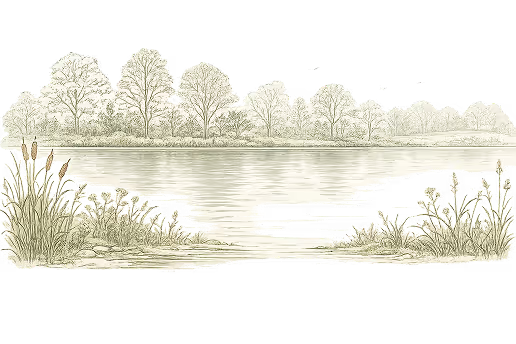
A boardwalk into the grasses
4.6-acre constructed wetland
Southwest edge

A boardwalk into the grasses
4.6-acre constructed wetland
Where the Lake’s Health Takes Root
Cedar Meadows sits quietly at the southwestern edge of Cedar Lake Park. It does not touch the lake directly, and at first glance it may feel set apart from the shoreline spaces found elsewhere in the park.
Here, the experience is different.
A boardwalk carries you into open grasses and flowering plants. The ground feels softer underfoot. The air holds birdsong. Red-winged blackbirds call from the stems, and purple martins circle overhead, supported by nesting houses built and installed by a Cedar Lake Park Association volunteer. Movement slows. Sound carries.
A meadow is defined by its plants — grasses, sedges, and perennial flowers forming dense communities above ground, with equally dense root systems below. In Cedar Meadows, those roots reach deep into seasonally saturated soil, creating a living sponge. Water lingers, settles, and filters rather than rushing across the surface.
What appears simple above ground is complex below it.
For many years, this area functioned largely as unattended floodland — present, but not fully recognized for its ecological role. Only more recently has it been acknowledged and managed intentionally as a meadow within the larger watershed system.
Though Cedar Meadows does not meet the shoreline, it feeds it. More than half of Cedar Lake’s inflow passes through this landscape before entering the water. As part of the Minnehaha Creek Watershed District, the meadow holds stormwater, traps sediment, and absorbs excess nutrients before that water continues downstream. Ongoing and future planning aim to strengthen both public access and the meadow’s water-filtering capacity — improving habitat, resilience, and long-term lake health.
Cedar Lake is treasured because water sits at its center. Protecting that water begins upstream. Cedar Meadows reminds us that stewardship is not only about the visible shoreline. It is about recognizing the landscapes that quietly do the work — and choosing to care for them deliberately.